
About Us
THE STORY OF 'MAYLANDS'
The following is a compilation of information sourced from various family histories both oral and written, local knowledge, and various texts. Our thanks go to descendants of the Pearce and Brownell families, and to the always-helpful and knowledgeable staff at the Tasmanian Library.
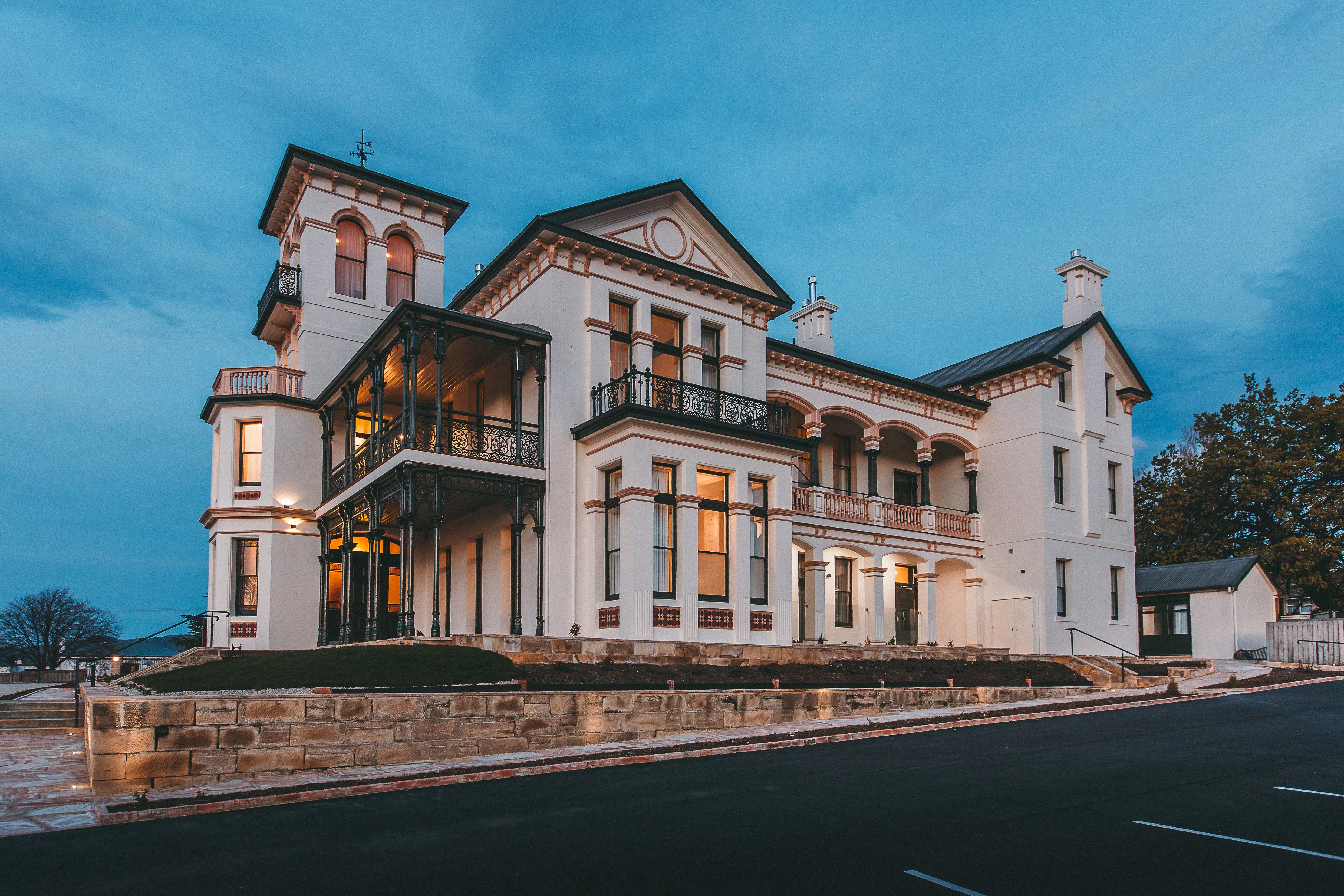
'Maylands' was built for John Pearce, a prominent merchant, and may have been named after the village of Maylands in Essex. Construction was commenced in 1885 and completed in 1887. A commentary at the time states it "stands on an eminence commanding a view which cannot well be eclipsed in the colony, an imposing and stately edifice, built after the latest architectural designs".
The architect was the renowned Henry Hunter, who designed many churches, public buildings, as well as private residences. This commission was one of his last projects in Tasmania.
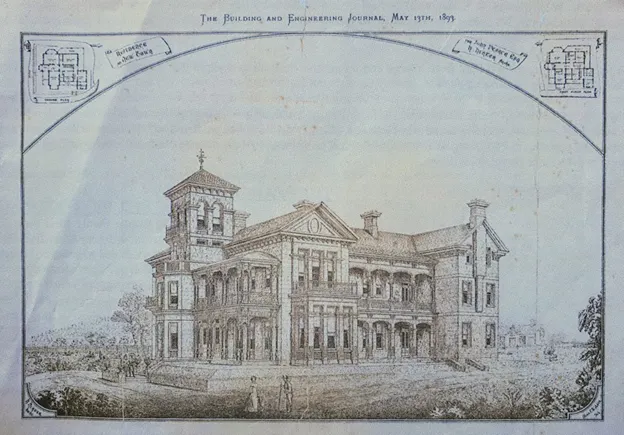
This ornate style of late 18th Century architecture is called Victorian Italianate. A wonderful graphic depiction of the newly-built 'Maylands' appeared in 'The Building and Engineering Journal', May 13th 1893, along with floor plans, depicting the house in all its glory.
Aside from its ornate appearance, 'Maylands' was also very functional in having been fitted with gas chandeliers, hung with electric bells to summon the servants, and a separate "tank room which furnishes the house with water and supplies either hot or cold water for shower baths". As well it had "a commodious kitchen replete with every convenience, and a scullery and larder".
The building contractor was Mr. P Cronly, who was paid "at least" E4,750. Approximately 70 contractors and subcontractors were employed at various times, and it is a strong testimony to the skill and craft of the time, from delicately stained glass, to meticulous timber paneling, to amazingly detailed cornices.
Timber moulding and joinery work was carried out on the premises by Mr. Frederick Skeels, the staircase embellishments by Messrs. C E Haywood & son. ornate cornices by Paton Bros. of Murray Street, painting by T F Gormley, plumbing by Mr John Dyer, electric bells by Mr J Hall, and iron fret„ork by Davidson & Brown of Barrack Street.
The interior is lit by natural light from a large and impressive decorative skylight that is quaintly described as "a large square glass lantern of coloured glass"
'Maylands' is included on the Tasmanian Heritage Register, although it is incorrectly recorded as 'Mayland'. No evidence has been found that this name was ever used. Also, it should not be confused with 'Maylands House', an early cottage still standing at 240 Macquarie Street, Hobart. The name should also not be confused with 'Mayfield' situated nearby at 9-11 Stoke Street, New Town.